
A LOW-FORCE MANUAL INTERVENTION

Small forces,
measurable responses
in tissue and body.

A low-force manual intervention, studied in the laboratory and in the clinic.

Kanshoho combines a gentle focal load of about 5.0 N with small active movements made by the person receiving it. We study how the body responds: tissue mechanics, blood markers and the course of clinical symptoms.[1][A]

Peer-reviewed paperShort report · 2025

Load and contact size:
a dose range for muscle hardness.

Focal load on the lumbar muscles with small side-bending movements

Participants
39 healthy adults
Duration
5 minutes
Load

The post/pre hardness ratio was lower at 4.9 and 7.4 N than at 2.5 N.

Contact diameter

The ratio was lower with 1 cm and 2 cm tips than with a 3 cm tip.

Source: Sugimoto S, et al. Journal of Physical Therapy Fundamentals. 2025;28(1):32–38 (in Japanese). Loads are reported in grams in the paper.
Methods and results →
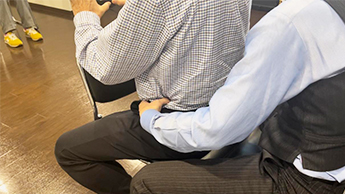
A practitioner places a hand on the lower back of a seated person, over clothing
Locating the contact point on the lower back of a seated person.Photo: Japan Health Organization

THE METHOD IN PRACTICE

A hand in contact,
a small movement of the body.

The technique itself is simple to look at: a fingertip contact and a small movement. Our research adds what the eye cannot see — the force, the duration and the measurement conditions.

What Kanshoho is →

RESEARCH AREAS

Three lines of enquiry

Measured changes and clinical observations,
each read against the conditions under which they were obtained.

SELECTED RESEARCH

Selected studies

Participants, design, observation period:
the conditions needed to read each result, stated up front.

01
mechanical responseManuscript submitted

Lateral abdominal wall, layer by layer:
acute change on shear wave elastography

Randomised crossover pilot study

20healthy men

In a randomised crossover study, 20 healthy men received a 10-minute 4.9 N procedure and a movement-matched 0.49 N control, 7 days apart. The public registry and symposium abstract describe a larger reduction in shear wave speed with 4.9 N, particularly at the deep interface between the external and internal oblique muscles. This submitted manuscript is introduced here through its public summary.

Comparison
4.9 N / 0.49 N
Time points
Immediately after · 15 min
Registration
UMIN000056162

A pilot study in young healthy men that captures a local mechanical response. Following the response beyond 15 minutes and extending the work to women, older adults and patients are the next steps. Layer-by-layer values and statistics will be added when the paper is published.

About the source Methods, results and next steps →
02
clinical assessmentPresented · unpublished manuscript

Chronic whiplash-associated disorder:
six months after a single session

Prospective single-arm pilot study

10patients · 9 followed to 6 months

Ten patients whose neck pain had persisted for 6 months or more after injury received one Kanshoho session; pain, function and range of motion were assessed. Immediately afterwards, pain at the peak pain angle had changed by a median of −33 mm on the VAS. Nine patients completed 6 months of follow-up.

Intervention
Single session, up to 20 min
Follow-up
6 months
Registration
jRCT1070250094

The improvement seen in this single-arm pilot informs the design of a controlled trial that also records natural course and concurrent treatment. A multi-centre study is being planned, and we are looking for sites.

About the source Methods, results and next steps →
03
biological responseConference presentation

Blood metabolome:
short-term change after a session

Randomised crossover study

9adults analysed

Blood metabolites were measured before and 10 and 30 minutes after the session in nine adults with low back pain. Several metabolites changed from baseline. This is an exploratory study; differences from the control condition are reported alongside.

Time points
Before · 10 min · 30 min
Presented
Japanese Society of Pathophysiology, 2025
Registration
UMIN000049180
Presentation slides (Japanese) Methods, results and next steps →

Each item identifies its status: peer-reviewed paper, submitted manuscript, conference presentation or unpublished manuscript.

All seven lines of research →

METHOD & ASSESSMENT

From a reproducible description
to comparable studies.

Force, contact site, the person’s own movement, duration. We put weight on stating the conditions of technique and measurement in concrete terms.

The dose-parameter paper
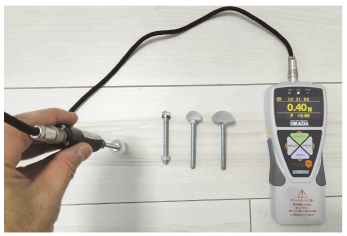
Load gauge and interchangeable contact tips of different diameters
Load gauge and contact tips used to verify force and contact diameter. Load, posture and movement for each study are on the Methods page.Photo: Japan Health Organization
01

Intervention

Site, posture, force, contact diameter, active movement, duration

02

Measurement and comparison

Measurement site, time points, comparator, primary and secondary outcomes

03

Transparency

Participants, ethics review, registration, funding, competing interests

Technique and measurement in detail →
IP

U.S. patent granted in 2021

US 11,207,238 B2 · Inventor: Takashi Sakato.
Patent details and public document →

OPEN QUESTIONS

How do the observed
changes fit together?

Local mechanics, blood markers, clinical symptoms.
From each observation we frame a question that tests a mechanism.

Replication across sites and practitionersDuration of the tissue responseRelation to symptoms and function
Mechanisms and hypotheses →

Sections marked “Research direction” describe hypotheses and proposed studies for discussion with collaborators. Observations are presented with their participants, methods and sources.

PUBLICATIONS

Publications

All papers and presentations →
2026
Case report / Explore

Resolution of Long COVID and ME/CFS symptoms following Kanshoho

Amitani H, Sakato T, Asakawa A. · DOI: 10.1016/j.explore.2026.103374

2025
Short report / Journal of Physical Therapy Fundamentals

Effect of Kanshoho on lumbar muscle tone (in Japanese)

Sugimoto S, et al. · DOI: 10.24780/jjptf.JJPTF_2023-17

2025
Narrative review / Cureus

Gentle, focal load (4.9–7.4 N): Kanshoho and conventional manual therapies

Sakato T, Amitani H. · DOI: 10.7759/cureus.89646

2024
Case report / Medicine

Severe fibromyalgia alleviated by a low-force muscle relaxation method

Amitani H, et al. · DOI: 10.1097/MD.0000000000037929

Status of the studies shown above

[A] Layer-specific SWE of the lateral abdominal wall (submitted manuscript)

Trial registration: UMIN000056162, “Analysis of myokine dynamics due to relaxation of the oblique abdominal muscles”. Related presentation: symposium, ICPM 2026 (Fukuoka).

The manuscript has been submitted. This site gives a summary limited to the public registry entry and the conference abstract; details will follow publication.

Public trial registry · ICPM 2026 programme — Haruka Amitani, symposium DSY11-2, 25 September 2026.

[B] Prospective study in chronic whiplash-associated disorder

Immediate and mid-term effects of Kanshoho in patients with chronic whiplash-associated disorder: a prospective single-arm pilot study (working title).

Summary based on the unpublished manuscript and on two conference presentations in 2026: the 55th Annual Meeting of the Japanese Society for the Study of Chronic Pain and the 35th Annual Meeting of the Japanese Society of Pathophysiology.

RESEARCH COLLABORATION

The next questions
are better answered together.

Replication, mechanistic work on the tissue response, controlled clinical trials. We are looking for research partners in Japan and abroad.

Bring a question, a measurement method or a clinical population. Together we can discuss the protocol, independent assessment and the practical arrangements for delivering the intervention.

We can provide research funding by agreement, following discussion of the study protocol and budget.

Discuss a collaboration Themes, what we bring, how we work
上部へスクロール