
Participants and design
Thirty-nine healthy adults sat upright and performed voluntary side-bending of the trunk for 5 minutes (15° to each side, 60 movements per minute, paced by a metronome). During the movement a rod-shaped applicator was held against the right lumbar paraspinal muscles. The applicator displays the applied load continuously and accepts tips of different diameters.
Muscle hardness at the contact site was measured with a hardness meter before and after each condition: five consecutive readings, highest and lowest discarded, mean of the remaining three. The post/pre ratio was compared across conditions with repeated-measures analysis of variance.
Conditions compared
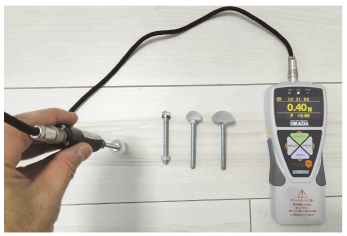
| Factor | Levels |
|---|---|
| Applied load | None, 250, 500, 750 and 1,000 g (≈ 0, 2.5, 4.9, 7.4 and 9.8 N). Loads are given in grams in the original paper. |
| Contact tip diameter | 1, 2 and 3 cm |
| Common to all conditions | Seated; voluntary side-bending; 5 minutes |
Results
Hardness decreased from before to after in all four loaded conditions; the unloaded movement alone was the exception. The post/pre ratio was lower at 500 g and 750 g than at 250 g.
For contact size, hardness decreased with all three tips, and the post/pre ratio was lower with the 1 cm and 2 cm tips than with the 3 cm tip.
Sex, body mass index and baseline hardness were unrelated to the post/pre ratio. The authors conclude that the largest effect was obtained at 500–750 g (≈ 4.9–7.4 N) with a 1–2 cm tip. Test statistics are reported in the paper.
Scope and next steps
This study defines a working dose range in healthy lumbar muscle, for a single session and an immediate outcome.
Research direction
A proposed collaborative study would test the same parameters in people with pain, in other body regions, and over a longer observation period. Two questions suit a partner laboratory well: how much applied force varies between certified practitioners, and how the time course of hardness relates to symptoms.
Ethics and reporting
Safety monitoring, ethics approval, funding and competing interests are reported in the paper. Two conference presentations from the same data set are listed under Publications .
Sources
- Sugimoto S, Sakato T, Nakayama T, et al. Effect of Kanshoho on lumbar muscle tone [in Japanese]. Journal of Physical Therapy Fundamentals. 2025;28(1):32–38. doi:10.24780/jjptf.JJPTF_2023-17
- Nakayama T, Sugimoto S, Sakato T, et al. Conference abstract P-028, 42nd Kanto-Koshinetsu Block Physical Therapy Congress, 2023 (in Japanese)
- Sugimoto S, Sakato T, Furuyama T, et al. Conference abstract YP-26-4, 10th Annual Meeting of the Japanese Society of Physical Therapy for Prevention, 2023 (in Japanese)
Sections marked “Research direction” describe hypotheses and proposed studies for discussion with collaborators. Observations are presented with their participants, methods and sources.
Last updated: 21 September 2026